

Gear that fits the player.
A shop can show you every racquet made. It can’t tell you which one fits your kid, or why your elbow hurts. That part we can do. Here is what we’d put in your hand, and why.
Start with the ball, not the racquet.
Junior tennis is built in stages: a slower ball on a shorter court, so a child can rally from day one instead of chasing. Each stage has a racquet length that goes with it.
Little Tennis Stars
- Ball
- Red · stage 3
- Court
- 36 ft
- Max length
- 23 in
- We start at
- 19 in
Light enough to swing one-handed without the head dropping. At this age the racquet is a balance problem before it is a hitting tool.
Foundation Hour
- Ball
- Red · stage 3
- Court
- 36 ft
- Max length
- 23 in
- We start at
- 21 or 23 in
The red ball bounces low and slow, so a child can meet it at waist height and actually rally. Size up when they outgrow the swing, not on their birthday.
Foundation Hour · Academy Block
- Ball
- Orange · stage 2
- Court
- 60 ft
- Max length
- 25 in
- We start at
- 23 or 25 in
The court gets longer before the ball gets faster. Most players want a full year here. This is the stage families rush, and rushing it costs technique.
Academy Block
- Ball
- Green · stage 1
- Court
- 78 ft (full)
- Max length
- 27 in
- We start at
- 25 or 26 in
Full court, ball still slower than yellow. A 26 in frame bridges to adult length without asking a growing player to swing a full-weight racquet.
Academy Block
- Ball
- Yellow · full
- Court
- 78 ft (full)
- Max length
- 29 in
- We start at
- 27 in adult frame
Move on height and strength, never age. If they can hold a full follow-through at the end of a long point, they are ready for an adult frame.
Ball stages, court sizes and the red, orange and green maximum racquet lengths are quoted from the USTA Net Generation Pathway Regulations. For the yellow ball USTA defers to the ITF Rules of Tennis, which cap a full-size racquet at 29 in. “We start at” is our own coaching recommendation. The regulation sets a ceiling, not a fitting, and a child’s height and strength decide the rest.
Most adults are in the wrong string, not the wrong racquet.
Polyester is what the professionals use, so it is what gets sold. For most club players it is stiff, it goes dead in a fortnight, and it is punishing on the arm. Find your level below. It is the same NTRP band your class is listed under.
Under NTRP 3.0
Forgiveness beats accuracy.
New to Tennis · Adult Beginner
You are still finding the middle of the strings, so buy the frame that rewards you when you miss it. A softer string does more for a new player than any frame upgrade, and costs a fraction of one.
- Frame
- All-around frame (lighter, larger head)
- String
- Synthetic gut
NTRP 3.0–4.0
The frame stops being the limit.
Adult Intermediate · Sunrise Doubles Lab · Evening Drill & Play
This is the band where most players are in the wrong string rather than the wrong racquet. If you are not breaking strings inside a month, you do not need polyester, whatever the pros are using.
- Frame
- All-around, or spin-friendly if you swing long
- String
- Multifilament, or a hybrid if you break strings
NTRP 4.0+
Control, and strings that hold up.
Adult Advanced · USTA Women's Team
Heavier, thinner beam, tighter pattern: you supply the power and the frame supplies the control. Match play eats strings, so a second racquet strung and ready beats any upgrade.
- Frame
- Traditional player's frame
- String
- Polyester or hybrid
Frame and string recommendations on this page are LBTA’s own coaching judgment, not a governing-body standard, unlike the red, orange and green maximums above, which are USTA regulation. If you are unsure, the fastest answer is to hand us your racquet.
On court most days? Cardio Tennis, Live Ball, a Four-Visit Pass?
Those sessions barely stop moving, and shoes are what pay for it. A guaranteed outsole is the cheapest insurance on this page.
What you actually need on day one.
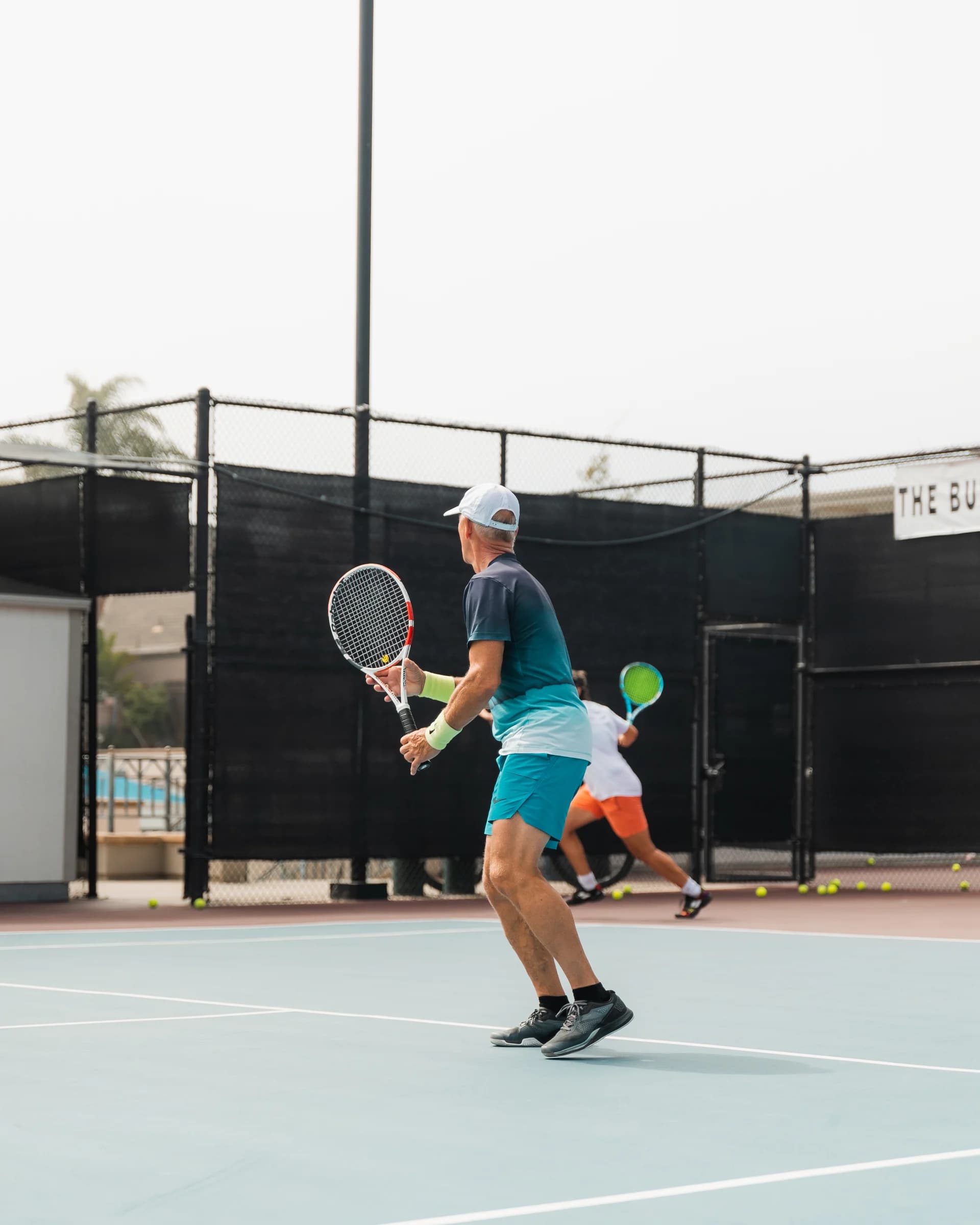
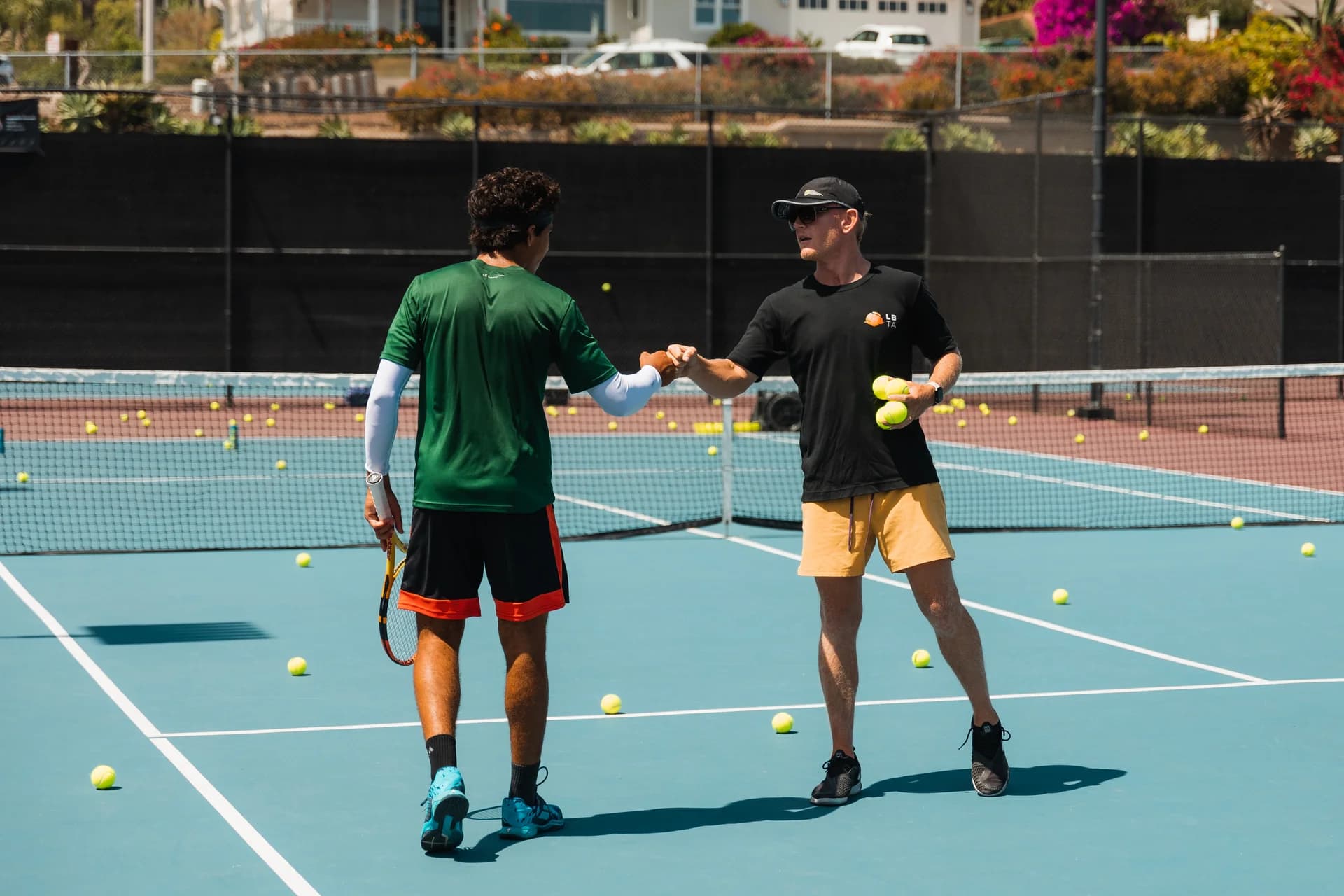
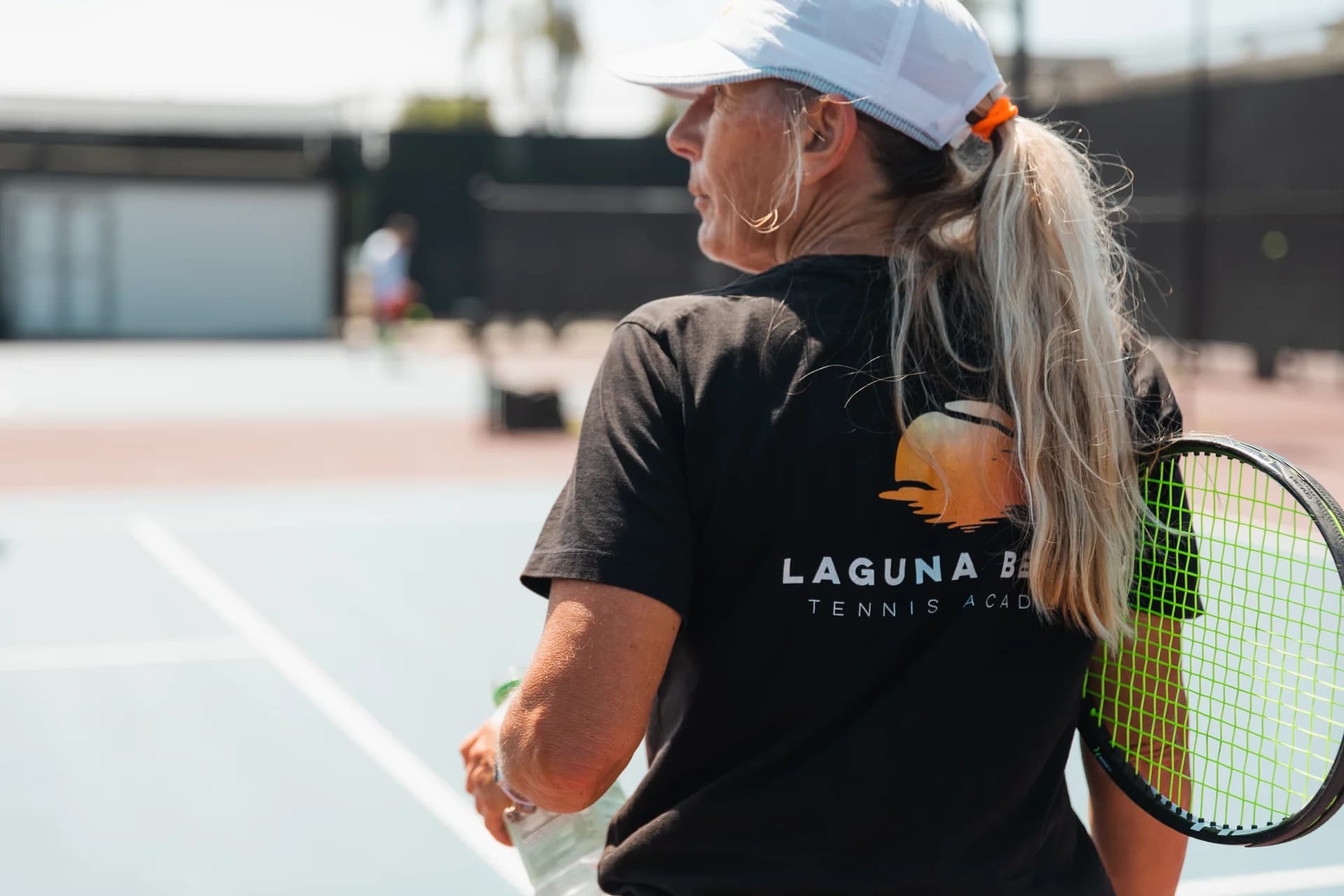
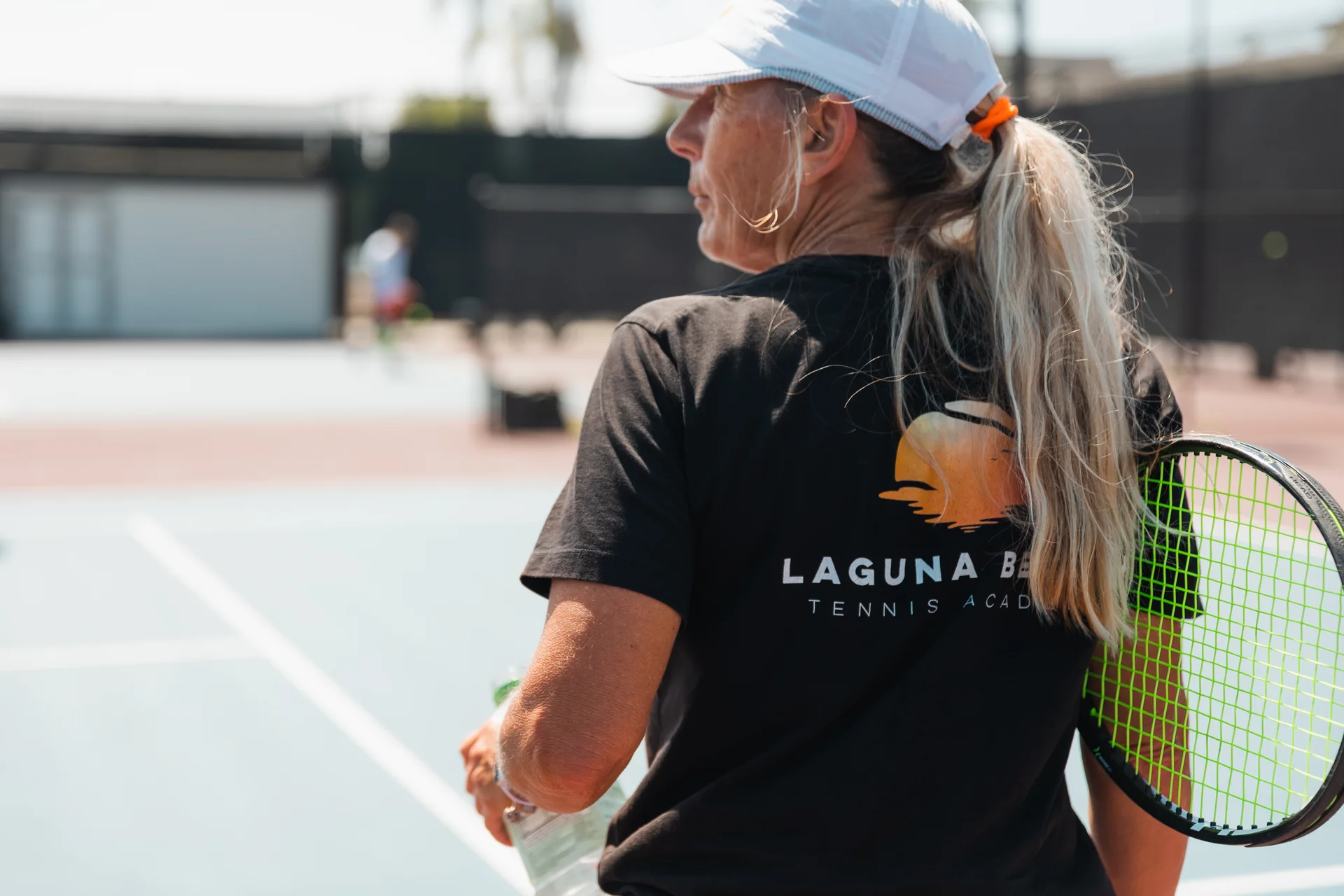
The frame is half of it.
A new racquet arrives strung to a factory default that suits nobody in particular, and a restring is the cheapest real upgrade in tennis. That part we do here in Laguna Beach, by the coaches who watch you play, so the tension follows your game rather than a spec sheet.
If you already know what you’re after.
Ask a coach before you spend.
Bring your player (or yourself) to a session and we’ll put three frames in your hand. Ten minutes on court settles it better than any chart, this one included.
Tennis Warehouse fulfils every order on this page, and LBTA earns a commission on what you buy through these links. Your price is the same either way. We send families there because it is where we buy our own gear. The picks are ours, and we’d make the same ones if they paid us nothing.